Crayola air-dry clay’s average drying time varies depending on its size. While it is obvious that the big ones do take longer, how long do the small craft items take to dry? On average, large Crayola air-dry clay projects can take up to 72 hours to dry. However, with the small ones, the maximum drying time is 24 hours or less. In this article, we will take an in-depth look at the duration of drying time for small crafts made with Crayola air-dry clay. So, without further ado, let us dive in!
Mechanical Factors Affecting Small Craft’s Drying Time
Brand Formulation
If you love crafting small figurines with Crayola air-dry clay, several mechanical factors affect the drying time, including the brand’s formulation. Even if the sculpture is of the exactly same size but made of different Crayola air-dry clay formulations, the drying time can vary drastically.
Layering
Small crafts that are made up of Crayola air-dry clay layers can take longer to dry as opposed to ones made with a single thick layer. So, if you plan on creating a miniature artwork using this air-dry clay, try to stick to a single layer for a faster drying process.
Texture/Surface Details:
While surface details or textures do add to the realism of miniature Crayola air-dry clay figurines, they can add to the drying time of the piece. The number of curves or dents can affect the drying process. While the difference might not be substantial, it does get delayed.
Environmental Factors Affecting Small Craft’s Drying Time
Moisture Present In The Air:
Although large air-dry clay sculptures are majorly affected by the moisture content in the air, it also affects the small Crayola air-dry clay sculptures. However, given that the surface area exposed to moisture isn’t much, the drying time isn’t delayed by a lot. You can speed up the drying process for small crafts by placing them close to a fan or opening the window of the room it is in.
Temperature Or Exposure To Sunlight
The overall temperature in the room the small artwork is in or its exposure time to sunlight can affect its drying time. If you happen to work in a cool environment, consider placing your small craft items in a relatively warmer place. This can effectively expedite the Crayola air-dry clay drying process. Yet, keep in mind that you must avoid placing your artwork too close to the source of heat else the drying process will be sped up drastically introducing cracks or flaking.
Drying Time For Miniature Figurines Made With Crayola Air-Dry Clay
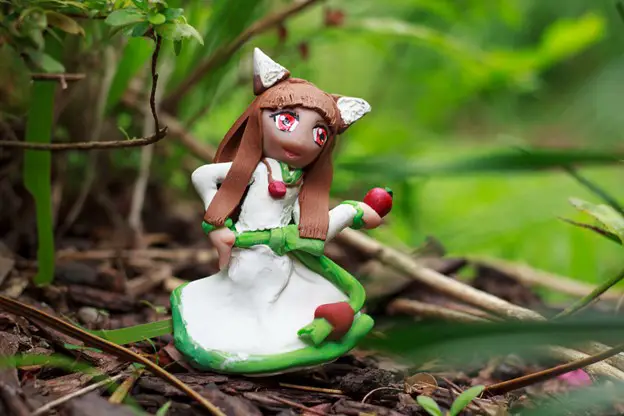
Miniature Crayola air-dry clay figurines are tiny replicas of animals, objects, or people. They can be used as collectibles, décor items, or gaming pieces. In most cases, miniature figurines are very tiny with intricate details. These details are the things that can delay the drying process. For example, a simple Crayola air-dry clay figurine with just a small ball for the body and a cylindrical shape for the hands and legs will dry faster. On the other hand, a miniature figurine with intricate details will take longer to dry. As a rule of thumb, make sure you leave the small sculpture untouched for at least 8 hours. After the first 8 hours, rotate it to ensure it dries out evenly from all sides. Let the drying process continue for 24 hours while you occasionally rotate it every few hours.
You can also use armatures for added support and faster drying. An armature keeps the parts of the figurines in place without the clay distorting or bending in places, especially on any joints. The distortion or bending that happens without an armature can delay the drying process. So, make sure you add an armature to the miniature artwork for an accelerated and glitch-free drying process.
Conclusion
In a nutshell, most Crayola air-dry clay small crafts or miniature figurines will dry out completely within a day or 24 hours. However, the drying time can be as short as an hour or two depending on the temperature and moisture content in and around your pottery studio. Whether you are creating handmade jewelry, bobbleheads, or miniature collectibles, keep this time estimation in mind, and do not poke around or start decorating your artwork before that.