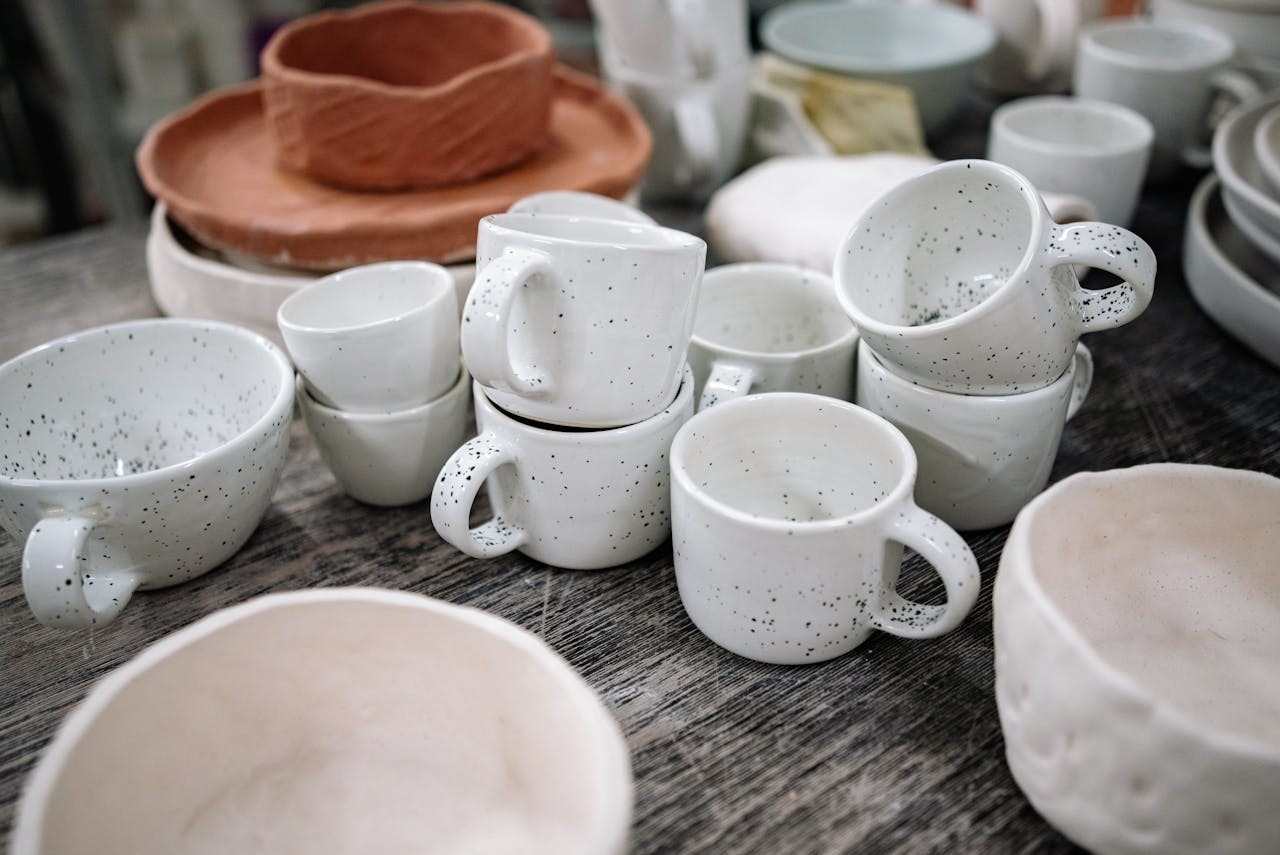
Glazing is an important part of the pottery-making process, which makes it both waterproof and durable while adding a nice sheen to the piece. While glossy glaze adds a beautiful shine to your pottery art, a matte one adds more depth and class to the artwork. Depending on what you like, you can opt for one or both for your project. However, if you are on a budget and only have access to a matte glaze, you can easily turn it into a gloss one simply by adding one ingredient. So, what is this magic ingredient, and how do you add it to the glaze? Let us find out!
Why Would You Want To Convert Your Matte Glaze To A Glossy One?
There are several reasons why you would want to convert your matte glaze to a gloss one. For starters, your favorite brand might not sell glossy glaze, or maybe they are out of stock. Another reason you would want to convert matte to glossy glaze is to save money. If your favorite brand sells matte glaze at a lower price as compared to the glossy one, you can save a lot of money by simply adding one ingredient to the matte glaze. Moreover, you might be unable to find your favorite color in the glossy variant. So, if you plan on transforming your matte glaze into a glossy one, let us know what this key ingredient is that allows you to convert matte glaze into a glossy one.
Turn Your Matte Glaze To A Glossy One: Key Ingredient
If you want your matte glaze to be a tad glossier or maybe even modify it into a completely glossy glaze, all you need to do is add this one ingredient to your glaze. Adding SiO2 or Silica to the glaze will turn a matte glaze into a glossy one. However, the intensity of the gloss would vary depending on how much Silica has been added to the mix.
For example, if you wish to completely turn your matte glaze into a glossy one, you need to add 40 grams of Silica to 100 grams of matte glaze. Of course, the final ratio is up to you, depending on how glossy you want it to be. However, 40 grams of Silica for 100 grams of matte glaze is an ideal ratio. Moreover, if you keep adding a lot of Silica to your matte glaze, it can increase the overall melting temperature of the glaze.
At some point, if you keep adding Silica, the glaze will have a lot of it, causing your piece to stay underfired.
Can Silica Turn All Matte Glazes into glossy Ones?
Pottery artists might wonder if Silica has the power to turn every matte glaze into a glossy one. Well, the answer is no. But, as it is in most cases, there are always some nuances and exceptions that you need to keep in mind.
So, it is important to test a small portion of your matte glaze before you commit to converting an entire batch. You can try out the Amaco Lead-Free Transparent Matte Glaze for this purpose. Its non-toxic formulation makes it ideal for testing purposes with Silica.
Here is how you go about testing matte glazes for conversion potential:
1. Prepare Your Test Batch:
Take a small portion of your matte glaze and keep it aside for testing purposes. Now, divide this glaze into multiple smaller portions.
2. Add Silica Gradually:
Pick one small portion of the glaze you just separated and add some silica to it. You can start with 2 percent of the total weight. With each portion, you can increase the amount of Silica added to the glaze. Make sure you have a portion that doesn’t have any silica for your reference.
3. Mix Thoroughly:
Ensure that the Silica is distributed evenly throughout the test batch. Also, use gloves while you do that.
4. Label:
Next, label each portion with the amount of Silica added.
5. Test Fire:
Now, test-fire each of these samples to see which ratio works best for you. Additionally, once you narrow down the number, you can make further adjustments to the recipe, like increasing its firing temperature or adding some more additives to get better output.
Conclusion
Adding Silica to your matte glaze is a great way to turn it glossy. In the test firing process, you can determine the amount of Silica that works best for your glaze brand. Keep in mind that the final result would vary depending on the brand of glaze being used by you. Do not forget to keep notes of your testing phase to replicate the outcome and get the perfect recipe to convert matte glaze to glossy one.