Acrylic paint is the go-to option for crafters who love to add colors to their air-dry clay projects. However, why should you limit your creativity to just one coloring medium? Air-dry clay is the perfect choice for crafters who are on a budget and do not want to work with a kiln or oven. It is easy to work with and free of toxins as well. However, there are more ways to add color to air-dry clay than just painting with acrylics. So, how can you add color to air-dry clay? Let us find out!
Color Before You Start Sculpting
Before you start crafting your project, make sure you pick pure white air-dry clay as opposed to off-white brands. Make sure the clay isn’t already colored. If you pick an off-white color, it can affect the final color of your project once you add any other color to it. Even if your clay is completely white, make sure you do a patch test before you apply the color to the rest of the clay batch.
Pick a coloring medium of your choice. You can select from the following options:
- For deep and vivid colors, acrylic is always a great choice
- Tempera, acrylic, or poster colors can be added to air-dry clay for bright and solid colors
- Oil paint can also work for coloring your air-dry clay, but it can be difficult to clean
- Icing or food coloring also imparts a similar coloring experience as tempera or acrylic
Additionally, you can also invest in readymade clay coloring agents, but they do not have a large range of colors and are also very expensive.
Coloring your air-dry clay can get a bit messy. So, you must prepare your work surface to protect it from possible staining. You can use disposable parchment paper or opt for silicone mats that can be reused. A great option you can try is the TDHDIKE Silicone Sheets for crafts. This pack of three features a non-skid design that doesn’t tear up or deform easily.


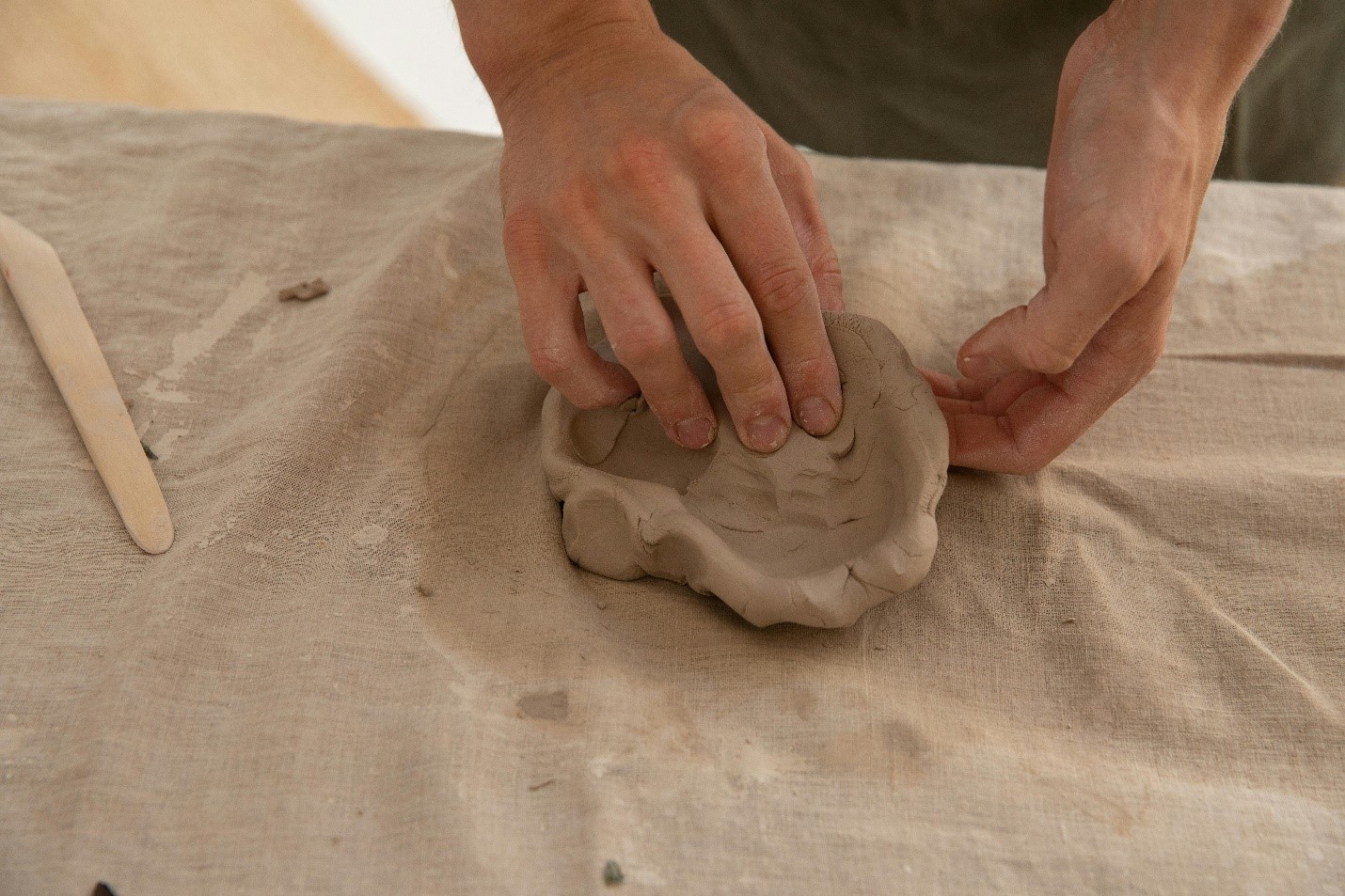
Also, make sure you wear rubber or plastic gloves when working with colors. Once you have properly kneaded your clay, start by adding a few drops of colors and mix it well with the same kneading action. If you feel that the color is light, you can add more depending on how dark the color must be. Once the color is uniformly spread out, you can start crafting.
Use Natural Colors
If you do not wish to work with artificial colors, you can always work your way around natural colors. Today, you can get a bright red color with beetroot powder or a dark purple dye with red cabbage. Depending on which color you want, you can always get a natural tint from regular food items or herbs. However, you need to keep in mind that these natural tints are very light and faded. They might not be very bright and solid.
Given that air-dry clay doesn’t have to be fired, the natural colors won’t burn off, and you will get a beautiful shade. This option is pocket-friendly and safe for children as well.
Use Black Chinese Ink
A lesser-known yet reliable way to color your air-dry clay is black Chinese ink. It tends to be very thick in consistency, and if you hurry, you might end up with ink squirts all over your clothes. Given that ink has a high-pigment color density, it can help you get stronger colors. Depending on how strong you want the colors to be, you can increase or decrease the amount of ink you add to the clay. Keep in mind that the ink, when wet, will be very dark black. However, the color can fade to a dark-gray shade once the air-dry clay dries out.
However, this is ideal only if you are crafting with black or shades of black. For other colors, you can surely experiment with alcohol inks.
Conclusion
Coloring air-dry clay is fairly easy. However, you need to experiment with a test batch to understand the amount of color you need to get the exact tint/shade of color for your project. While acrylic color is surely the go-to choice for pottery artists that love to work with air-dry clay, the above-mentioned options can be just as good and maybe even better, depending on what your project is about.