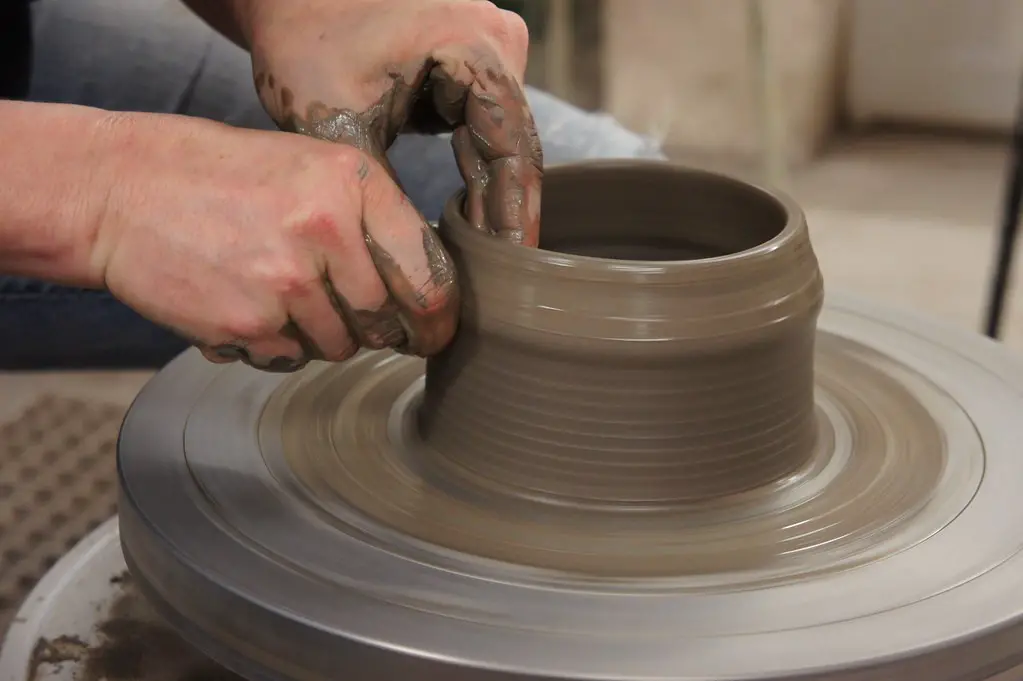
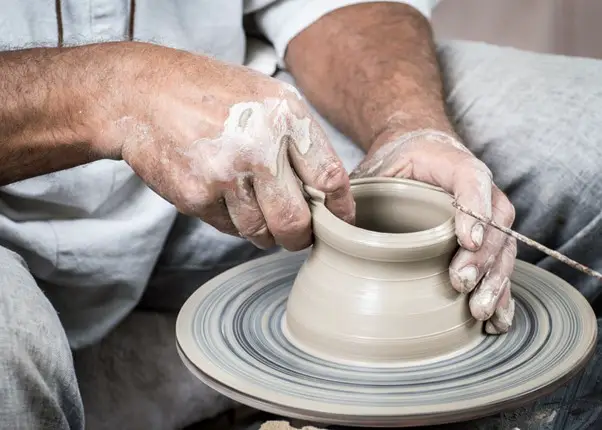
You might be fond of pottery making, and that love of yours made you come to this field to build your own pottery piece. But what to do with the bad pieces that you have made while practicing?
Somedays, you might build it perfectly the way you want it to be. But there are even those days that make it hard enough to achieve the perfect shape of your pottery that you desired. Wait, don’t throw it away! You can again revive it and give it a new and creative-looking form. How to do it? Here, have a look.
Grind it up!
In case you have attempted a bad shape of the pottery. Don’t worry; you still have time to make it up. Don’t throw it instantly after making the wrong shape. Use that one to create again. If you haven’t fired it even once, you can break it first into small pieces. Then thoroughly grind the broken pieces to get rid of the lumpy structures.
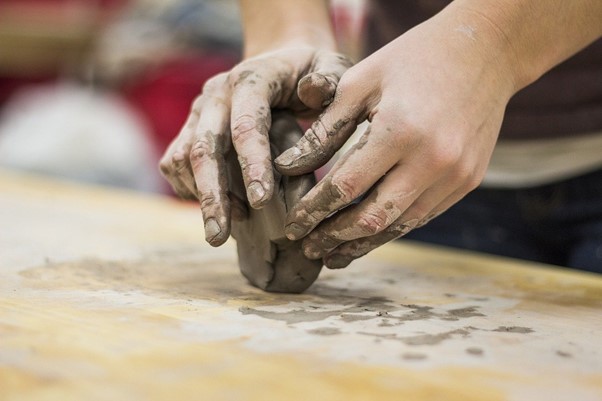
You can also throw it and slice it evenly using a wire to make the pieces small first. Then again, smash them properly to get back the clay. It is worth breaking the bad pieces and starting it from scratch if you are not satisfied with the first one. After grinding it, wedge it properly and then start building it again.
Wondering what the benefits of doing this are?
- You get to revive your clay, and it saves your money to buy another packet of clay. Also, wasting the clay is not at all a good idea.
- You can get rid of the bad pieces. Why shorten your space to store those bad pieces when you can give them a new life?
Soften the clay:
In case you are not any happier with the pottery piece, and this is your sudden realization after you have dried it to bone hard. Well, you can still revive it. But you need to follow a few methods to soften the clay, which is much more effort-intensive than breaking it while the clay is wet. So how do you do it? First, break it!
While it’s leather hard or bone hard, you cannot throw it to the wheel or use your hands to reshape it. All you can do is break it using a heavier object. Use a hammer to break it into even pieces, and then collect those clay pieces and revive them.
Revive the clay pieces:
As now you have all the clay pieces after breaking the pottery, you can merely revive those pieces to get back the clay’s new shape. Here is how you can do it:
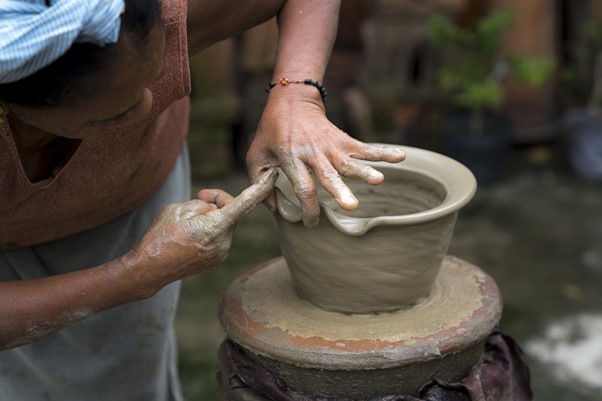
Get hold of a large container and fill it with the collected bokeh pieces of the bone-hard clay. Measure the amount of clay and submerge it in the right amount of water. Soak the ceramic clay in clean water and allow the water to get absorbed almost within the clay. While soaking, do not stir it very often. Leave it for 2-4 days. After that, you are going to get a mushy texture.
Now you need to drain the water properly. And then, you need to lay the clay on the top of a firm cloth and place it on a plaster slab while spreading the mushy clay evenly. Smoothen the top of the clay and allow it to dry a little bit, and achieve plasticity and workability.
Either you can store it for use later or work on it right away after getting that perfect texture that you prefer to work with. You can use an easily reusable clay, like Terra Cotta Low Fire Cone 06 Red – Rocky Mountain Clay’s Red Rock Red Clay to make it workable again.
Rehydrate your bone-dry clay pot:
If you are not feeling good with the labor-intensive idea of breaking it and making it soft again, then you can start with rehydrating the bone-dry pot to make it workable again. Here is how you can rehydrate it:
Take a plastic bag and place it on a flat surface. You need to take some folded newspaper and place your bone-dry clay pot on the paper. Then you need to make a plastic tent above the pottery. Make sure the plastic stays off the clay. No wet some towels or rags place them around the cluster of the pot in a circled way.
Also, make sure the towel is not touching the newspaper. Then cover it using plastic and seal the edges. It will help the pottery absorb the moisture, which will make it soft and workable again. It might take 1-2 weeks to retain the moisture.
What are the other measures that you can apply to rehydrate the clay? Well, check out the table below.
Method |
How to do it? |
How much time will it take? |
| Use a damp box to rehydrate the clay pot | A drop box helps you create an environment capable of trapping the moisture and adds humidity to the clay. Take a damp box, then pour a layer of 1-2 inches of plaster in the container. Then press and flip the plaster after settling. Reposition it in the plastic box, moisten it, and put your clay pot on it. Just close the box and let it create humid weather. | 2-3 days |
| Rinse the pot and wrap it | First, you need to rinse your one dry pot under running water or a tap for a few minutes. Then dampen a small towel or a rag, wrap it around the pot for some more time, and it will retain the moisture. | 20-25 minutes |
Conclusion:
Once you are done with reviving the moisture of your bone-dry clay, make sure you are making the right use of it. All the methods discussed above are only applicable to the pots you haven’t put for the first firing. Once you are done with firing, it is no more capable of being workable again. So, keep a note of that.
Hopefully, the ways mentioned above will help you retain your bad pottery piece’s workability and create it again.
Happy sculpting!