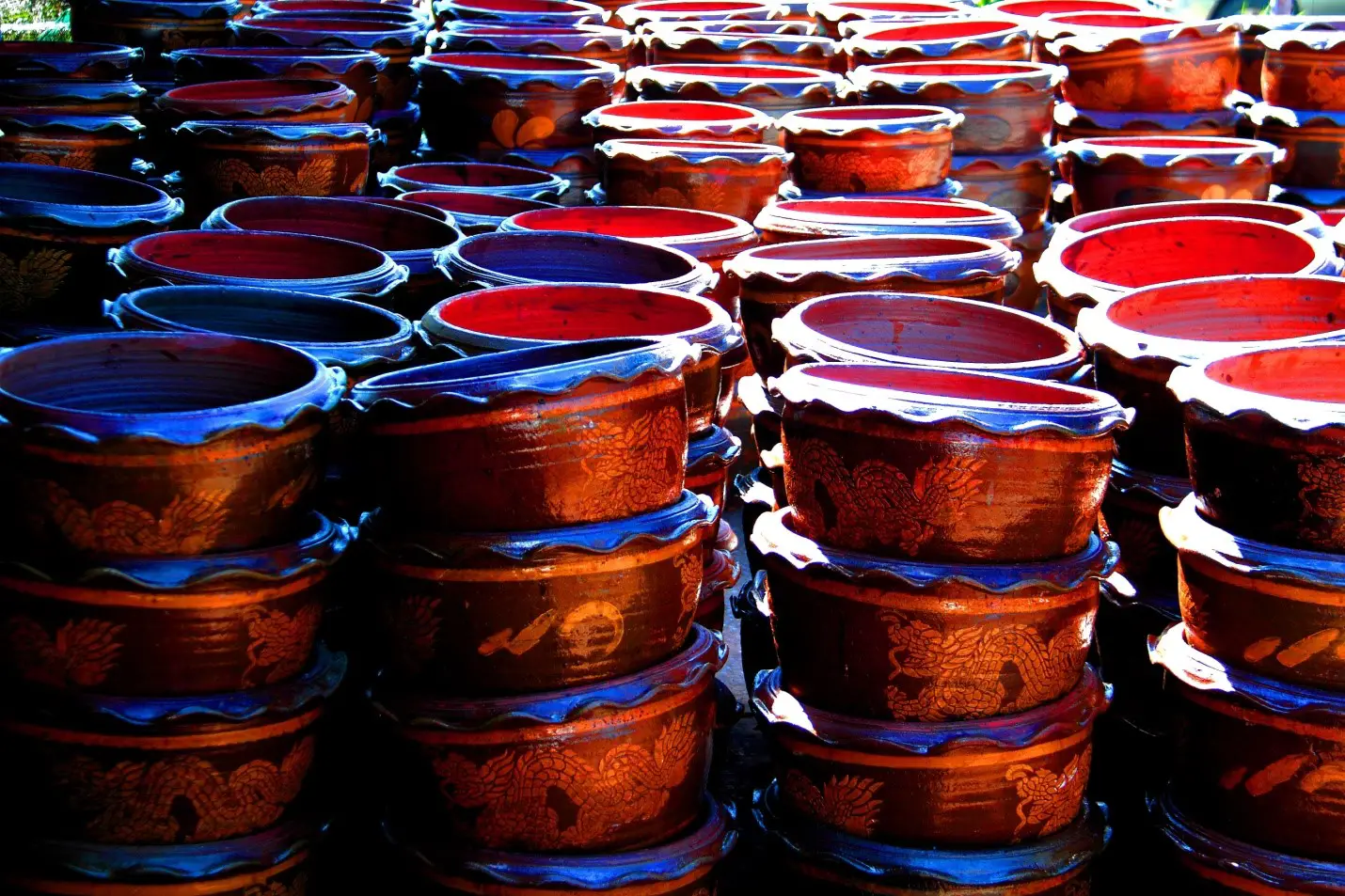
Iron oxide, although a bit messy to work with, can give you some excellent results when you use it on your pottery the right way. Whether you have previously worked with iron oxide or wish to learn more about its decorative capabilities, this blog will help you dive deeper and create some wonderful pieces of artwork. From the intricate use of brushwork to paint iron oxide on your clay’s surface to the trick of using slip trailing to create some remarkable designs, we will explain it all and more. So, without further ado, let us get started!
Using Brushwork To Decorate Pottery With Iron Oxide
The brushwork is simply the method of applying iron oxide onto the clay surface with the help of a pottery painting brush. However, it isn’t as simple as it seems. Several steps need to be followed one after another to ensure you get the right color and design after the piece has been fired in the kiln.
- Create An Iron Oxide Paste:
You cannot just brush on dry, powdered iron oxide on the pottery piece. To be able to use iron oxide for brushwork, you need to create a paste that will stick to the surface. For this, simply start by adding water to the iron oxide powder. Remember not to add a lot of water all at once. Just like you knead the dough, add water slowly to the iron oxide powder and keep stirring until you achieve a cream-like thick consistency.
- Decide Your Pattern/Design:
Before you get to this stage, your pottery must be bisque-fired to get the best effects of iron oxide. Next, you can either look for a pre-made stencil online or create a rough sketch of your design lightly on the surface of the pottery with a pencil. Do not worry, the pencil marks won’t show up after the kiln firing process.
- Apply Iron Oxide:
With a fine brush, simply start applying the iron oxide paste you created earlier. To get higher precision and control, make sure you use a brush with a pointed tip. However, depending on your design, you can also use flat brushes. Keep in mind that iron oxide can be layered to create unique textures and depth. Additionally, you can also blend this iron oxide paste with other oxides or colored slips to get unique hues and shades.
Once you are done applying the iron oxide, make sure you let it dry completely before it is bisque-fired again. Once the bisque-firing process is complete, you can apply glaze on top of the iron oxide decoration to protect it during the final kiln firing while enhancing its appearance.
Slip Trailing To Decorate Pottery With Iron Oxide
Potters have used the slip trailing technique for decades and the same can be used to decorate your pottery art with iron oxide.
- Prepare Your Iron Oxide Slip Mix:
To prepare this mixture, simply mix clay, water, and iron oxide in equal proportions to create a flowing and consistent texture. Keep in mind that the amount of water required to create a flowing consistency can vary depending on the amount of clay and iron oxide added to the mix. The ideal consistency has to be thick enough to hold shape while thin enough to flow well through the application or slip trailing bottle.
- Apply The Iron Oxide Slip Mix:
Pour the slip mix into a fine-tipped applicator. This bottle can be used to draw dots, lines, or even some beautiful intricate patterns depending on your requirements.
- Bisque Firing:
Once you are done with the design, let the iron oxide slip dry off completely before you place it inside a kiln for bisque firing. The firing temperature should be designed per the clay type used for pottery making.
Sgraffito Technique For Decorating Pottery With Iron Oxide
Another popular pottery decoration technique, sgraffito, can be used to play around with iron oxide. For the unversed, sgraffito is a technique that requires the glaze or slip layer to be scratched or carved to reveal a contrasting color layer or clay body underneath.
- Apply The Iron Oxide Slip Layer:
Just like slip trailing, you need to prepare a similar iron oxide mixture to be applied on your pottery piece’s surface. Use a flat and smooth brush to coat the pottery while ensuring that the iron oxide slip is distributed evenly throughout the surface.
- Create Your Design:
Once your slip is leather-hard but not completely dry, the sgraffito process can be started. You can use any sharp tool of your choice to carve out your design through the slip. You can use the Zuoyou Pottery Sculpting Tool to sculpt, trim, or add details to your pottery. This professional tool set comprises 6 aluminum alloy pieces that are durable and perfect for long-term use.
Additionally, make sure you don’t go too deep into the clay body and simply work on the surface level to reveal the clay body underneath. Once you have carved your design, let the slip dry out completely.
- Bisque-Fire Your Pottery:
After the pottery and iron oxide slip has completely dried, you can place it inside a kiln for a bisque firing process. Once the pottery has been successfully bisque-fired, you can apply glaze over it for the final firing process. The glaze should automatically settle well into the carved depth and lines of the decoration. Now, fire the pottery at a temperature recommended for the clay used in the process.
Conclusion
Using these artistic, versatile, yet simple techniques, you can add some beautiful textures and characters to your artwork. Remember that iron oxide is notorious for staining. So, make sure you place an old cloth or used paper on the surface you work on. This will prevent unnecessary staining that can happen with the use of this oxide. Additionally, use safety gear such as a mask to prevent the dry iron oxide particles from entering your airways. Although this chemical compound is considered safe for use and is non-toxic, its inhalation should be avoided at all costs. While keeping in mind the safety requirements, make sure you unleash your creative side and enjoy making something interesting.